Regulation guides, application notes, sizing tools and a working glossary — for plumbers, M&E engineers, and compliance officers specifying RPZ and check-valve protection.
Every connection to the public water supply carries a duty: to ensure water cannot flow backwards into the wholesome mains and contaminate it. Under the Water Supply (Water Fittings) Regulations 1999 — and Paragraph 15 in particular — preventing backflow is a legal requirement on every fitting, not a matter of best practice. Contaminated backflow has caused documented outbreaks of illness in schools, hospitals, and food premises; the regulations exist to make those events impossible by design.
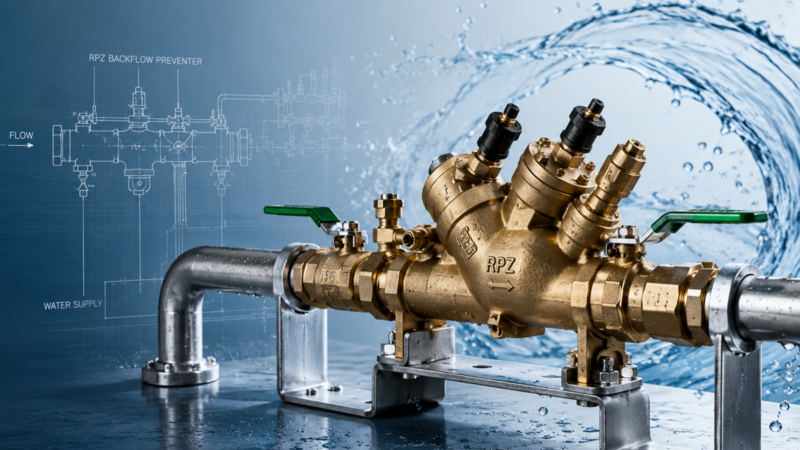
The level of protection required depends on risk. BS EN 1717 sorts every installation into one of five fluid categories, from Category 1 (wholesome water) to Category 5 (a serious health hazard from faecal matter or pathogens). Each category maps to a minimum protection device — a single or double check valve, an RPZ valve, or a physical air gap. Specify below the category and you create an unprotected pathway; over-specify and you waste cost and headloss.
This Knowledge Hub brings the regulations, the certified devices, and the working tools into one place. It is written for the people who carry the responsibility — plumbers, M&E engineers, facilities managers, and compliance officers — and anchored throughout to the source legislation, WRAS guidance, and KIWA certification.
What you’ll find here
Regulation guides for every common installation type, mapped to fluid categories
Sizing tools that link each result back to the relevant regulation
Insights from real audits, retrofits and common failures in the field
Datasheets & certificates for WRAS-approved Arrow Valves devices
Backflow protection requirements for all wholesome-water fitting connection points under Water Supply (Water Fittings) Regulations 1999, Schedule 2, Regulation 15.