Applications

Residential

Residential

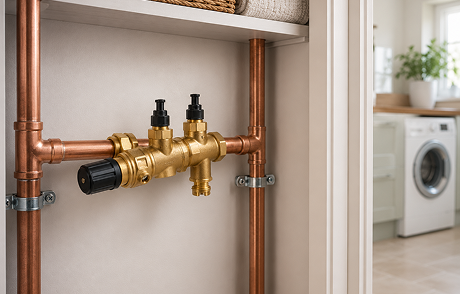
Domestic dwellings, flats, landlord stock and mixed-use residential blocks. Typical risks are hose-union taps, filling loops and garden irrigation.

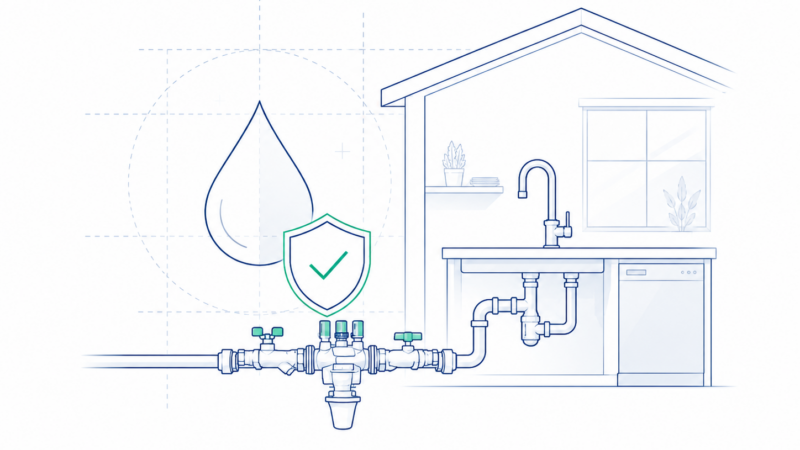
Residential water safety starts with everyday protection

Homes connect to a wide range of fittings and appliances that can create backflow risk. Correctly specified and maintained protection helps prevent contamination of the mains supply, protects property and supports compliance with BS EN 1717 and water regulations.

Risk reference

Common residential installation risks

Connection typeBS EN 1717 categoryProtection methodNotes
Hose union tap3–5RPZ or air gapDepends on downstream use
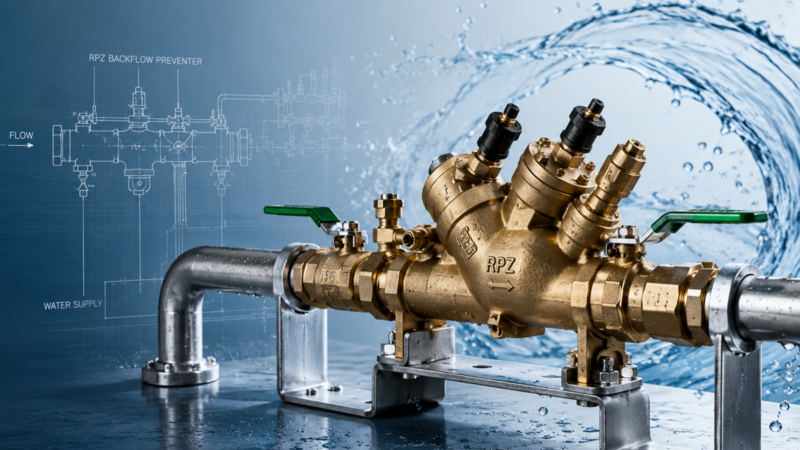
Filling loop4RPZ (BA)Not a double check on non-house systems

Products

Product families commonly specified against this guide.

Regulation guide

Insights on

Residential

Insight

How a live-site maintenance window was used to bring HU outlets into AIM.

Insight

Missing test cocks, inverted relief valves, and isolation that makes annual AIM testing impossible.

Insight

When a mechanical device cannot replace a Type A air gap — and how to dimension the weir.

Tools & calculators

Calculate, look up, decide

Estimate peak and average daily water demand for a building type or specific outlet cluster.
Answer five questions about installation type, fluid category and pressure to receive a recommended valve.

Need a specialist for this installation?

Lorem ipsum dolor sit amet, consectetur adipiscing elit. Ut elit tellus, luctus nec ullamcorper mattis, pulvinar dapibus leo.

Continue reading

Related articles

Insight

Missing test cocks, inverted relief valves, and isolation that makes annual AIM testing impossible.

Insight

Closed heating and chilled circuits are Category 4. A double check on the filling point is not enough.

Insight

When a mechanical device cannot replace a Type A air gap — and how to dimension the weir.